
 Save
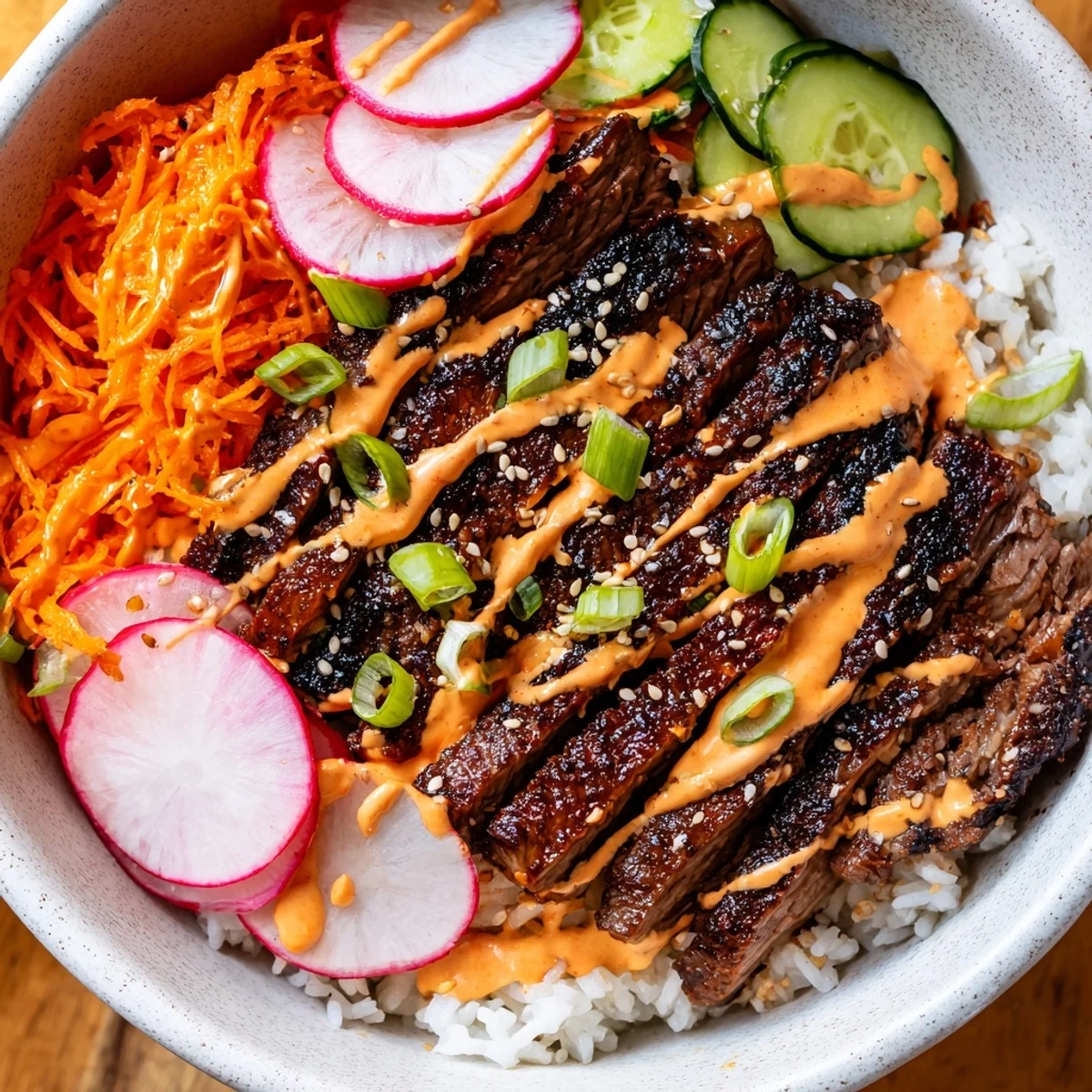
Save These Korean-inspired rice bowls feature tender flank steak marinated in a sweet and savory blend of soy sauce, sesame oil, garlic, and gochujang. The steak cooks quickly over high heat, developing a caramelized exterior while remaining juicy inside.
Fresh vegetables like shredded carrots, cucumber, and radishes add crunch and brightness, balancing the rich meat. The creamy spicy sauce ties everything together with mayonnaise, sriracha, lime juice, and honey creating a tangy, cooling contrast to the Korean flavors.
Ready in just 35 minutes, these bowls come together effortlessly for a satisfying dinner that feels restaurant-quality but is entirely achievable at home.
The first time I made these bowls, I was rushing to feed friends who'd dropped by unexpectedly. I had flank steak in the fridge and a jar of gochujang gathering dust, so I threw everything together in about twenty minutes. When we sat down to eat, the conversation stopped dead. That creamy-spicy sauce against the sweet caramelized steak changed everything I thought about quick weeknight dinners.
Last summer, my sister came over after a brutal day at work. I made these rice bowls and watched her shoulders actually drop as she took that first bite. The combination of hot steak, cool crisp vegetables, and that sauce hitting warm rice—it's comfort food that feels like a hug. Now she texts me whenever she needs that specific kind of dinner therapy.
Ingredients
- Flank steak (450 g): Thinly slice this against the grain for maximum tenderness and it absorbs that marinade beautifully
- Soy sauce (2 tablespoons): The salty base that makes everything else pop
- Brown sugar (1 tablespoon): This is what gives the steak that gorgeous caramelized crust
- Sesame oil (1 tablespoon): Don't skip this—its that nutty aroma that screams Korean barbecue
- Rice vinegar (2 teaspoons): Just enough brightness to cut through the richness
- Garlic (2 cloves): Freshly minced releases way more flavor than the pre-minced stuff
- Fresh ginger (1 teaspoon): Grate this directly into the marinade for that spicy warmth
- Gochujang (1 teaspoon): Korean chili paste brings depth beyond just heat
- Cooked jasmine rice (2 cups): Make it fluffy and slightly warm so it soaks up every sauce drop
- Mayonnaise (4 tablespoons): The creamy base that tames all that spice
- Sriracha (2 tablespoons): For that garlicky kick we all know and love
- Lime juice (2 teaspoons): Fresh lime makes the sauce sing and cuts the richness
- Honey (1 teaspoon): Just a touch to balance the heat and bring everything together
- Shredded carrots (1 cup): They bring that crunch and color contrast
- Cucumber (1 whole): Thinly slice these—they're the cool refreshing element you need
- Spring onions (2 stalks): Their mild bite is perfect here
Instructions
- Marinate the steak:
- Whisk together the soy sauce, brown sugar, sesame oil, rice vinegar, garlic, ginger, gochujang, and sesame seeds until the sugar dissolves. Toss the sliced steak in this mixture and let it hang out for at least 15 minutes—you'll taste the difference.
- Get your rice ready:
- Make sure your rice is cooked and fluffed. Warm rice works best here since it helps everything come together in the bowl.
- Mix up that sauce:
- Combine the mayonnaise, sriracha, gochujang, lime juice, and honey until it's silky smooth. Give it a taste—this is where you control the heat level.
- Sear the steak:
- Get your skillet screaming hot over high heat. Cook the steak in batches so you don't crowd the pan, about 2 to 3 minutes per side until you see those caramelized edges.
- Build your bowls:
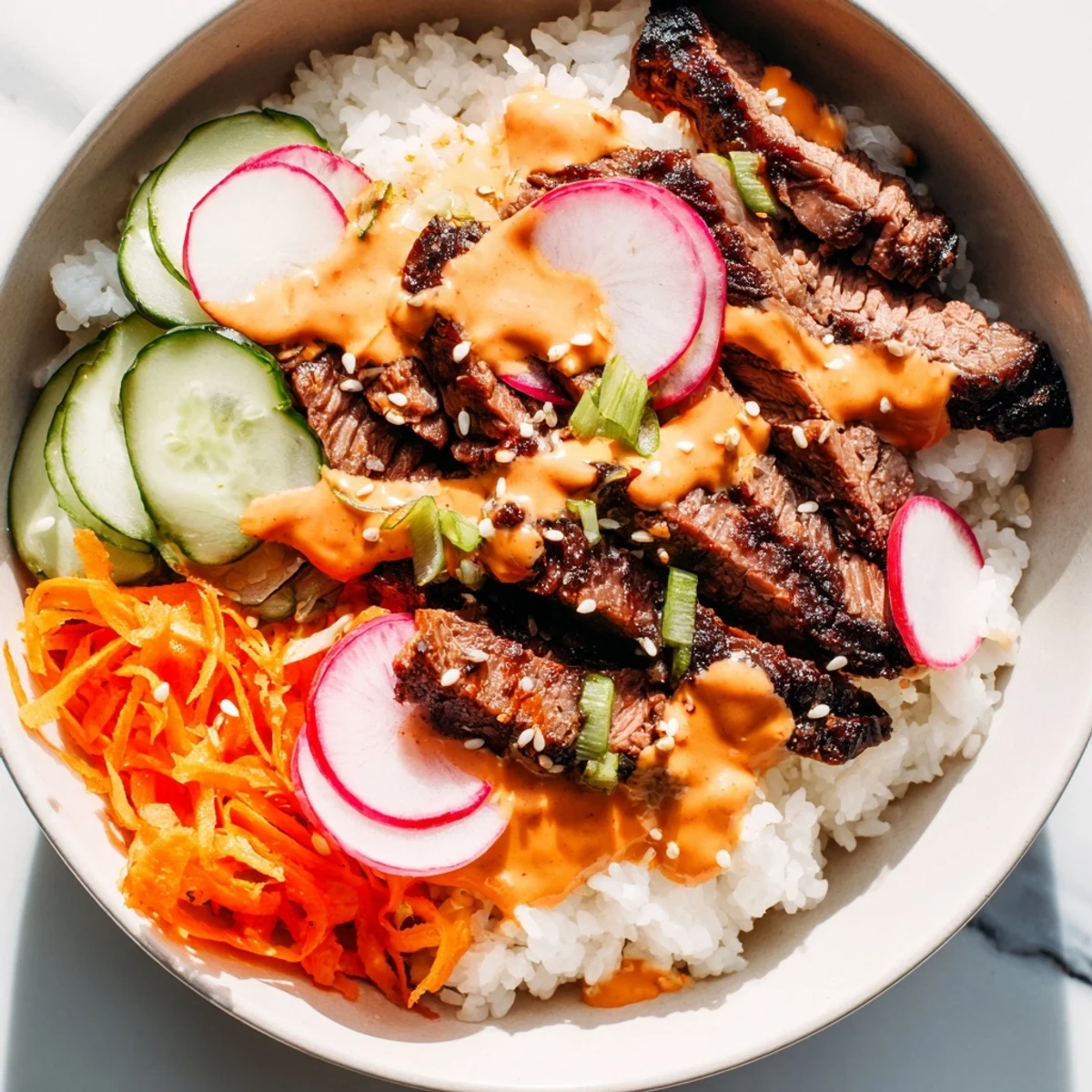
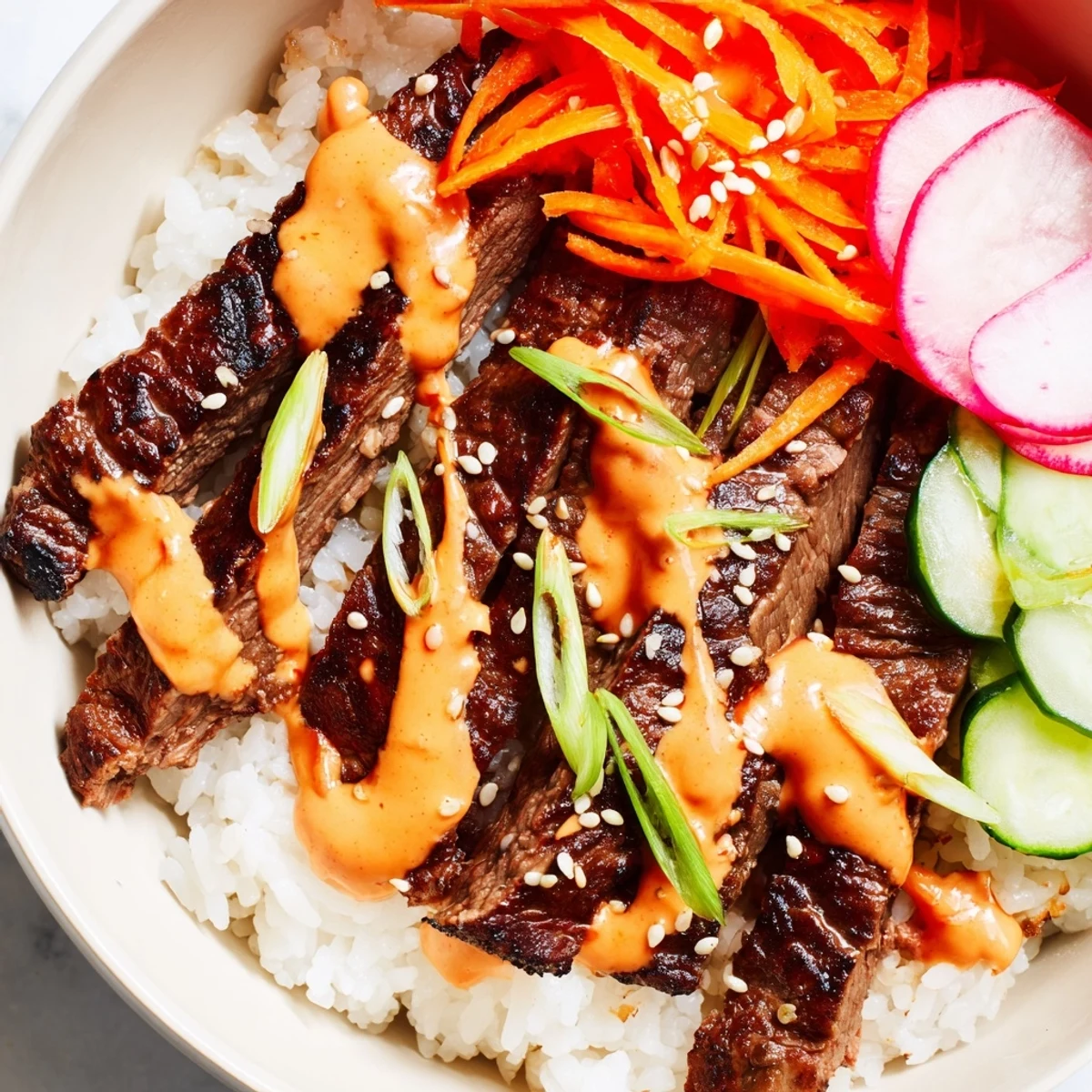
- Divide the warm rice among four bowls. Arrange the steak on top like you're plating for a food blog, then add the carrots, cucumber, radishes, and spring onions in little sections.
- Finish with flair:
- Drizzle that spicy cream sauce everywhere. Hit it with sesame seeds and fresh herbs if you're feeling fancy. Eat it while the steak's still hot against the cool vegetables.
 Save
Save These bowls became my go-to for Sunday meal prep after I realized they're somehow even better the next day. Something about those flavors melding together overnight makes each bite more complex than the last. My partner now requests them weekly without fail.
Making It Your Own
I've tried so many variations after running out of flank steak one night. Thinly sliced chicken breast works beautifully and takes about the same cooking time. For a vegetarian version, use firm tofu cubes or portobello mushrooms—they absorb that marinade just as greedily. The sauce remains the star regardless of your protein choice.
Perfecting The Rice
Rinse your rice until the water runs clear before cooking—it removes excess starch so each grain stays separate. A splash of rice vinegar and a drizzle of sesame oil folded into hot rice right after it's done makes it taste restaurant-quality. Let it cool slightly so it's not piping hot, but still warm enough to soak up the sauces.
Sauce Secrets
The magic happens when you balance the heat with enough fat and sweetness. Start with less sriracha than you think you need and taste as you go. The honey is crucial here—it mellows the sharp edges and brings everything together into something cohesive rather than just spicy.
- Double the sauce recipe and keep it in the fridge for up to a week
- Add a teaspoon of rice vinegar to thin it out for drizzling
- This sauce works on burgers, tacos, and even roasted vegetables
 Save
Save There's something deeply satisfying about a meal that looks impressive but comes together this quickly. I hope these bowls become part of your regular rotation too.
Recipe FAQs
- → What cut of steak works best for Korean BBQ bowls?
-
Flank steak is ideal because it's lean, flavorful, and slices beautifully against the grain. Skirt steak or thinly sliced ribeye also work well. The key is cutting the meat thinly so it marinates deeply and cooks quickly over high heat.
- → Can I make the spicy cream sauce less spicy?
-
Absolutely. Reduce the sriracha and gochujang to half the amount and increase the honey and mayonnaise slightly. The sauce will still be flavorful and creamy with just a gentle warmth rather than intense heat.
- → How long should I marinate the steak?
-
Fifteen minutes is the minimum for good flavor absorption, but you can marinate up to 4 hours for deeper penetration. Don't exceed 8 hours or the soy sauce may make the texture mushy.
- → What vegetables can I add to the bowls?
-
Sliced bell peppers, shredded cabbage, pickled carrots, daikon radish, bean sprouts, or blanched broccoli all complement the Korean flavors. Kimchi makes an excellent addition for extra tang and probiotics.
- → Can I prepare these bowls in advance?
-
You can marinate the steak and prepare the sauce and vegetables up to a day ahead. Cook the steak fresh and assemble just before serving for the best texture. Leftovers keep well for 2-3 days—reheat the steak gently to avoid overcooking.
- → What rice variety should I use?
-
Short-grain white rice is traditional and pairs beautifully with Korean flavors, but jasmine rice offers wonderful fragrance. Brown rice works too though it requires a longer cooking time. Use whatever you enjoy most.