
 Save
Save Crafting authentic Greek yogurt at home begins with heating whole milk to 180°F, then cooling to 110°F before introducing live cultures. The milk ferments undisturbed for 6–8 hours, developing that signature tangy flavor and creamy consistency. The crucial step separates regular from Greek: straining through cheesecloth removes whey, creating the luxuriously thick texture we love. The process requires minimal active time—just 15 minutes of preparation—while the culturing and straining work their magic over several hours.
Homemade Greek yogurt delivers superior freshness and allows complete control over thickness and tanginess. The strained whey shouldn't be discarded; it adds protein and nutrients to smoothies, baked goods, or soups. Once mastered, this technique becomes a kitchen staple, yielding four cups of creamy perfection perfect for drizzling with honey, pairing with fresh fruit, or incorporating into both sweet and savory dishes.
The first time I attempted homemade yogurt, I kept checking the oven every 20 minutes like an anxious parent, convinced nothing was happening. When I finally lifted the towel after eight hours, there it was: this impossibly thick, creamy creation that somehow came from just milk and time. Now my kitchen counter always has a batch culturing, wrapped in its little towel blanket like a pet that needs warmth.
Last summer, my neighbor Sarah knocked on my door because she could smell something wonderful baking and assumed I was making cheesecake. I laughed and showed her my yogurt strainer setup in the fridge. She left with a small jar and returned the next day demanding the recipe, saying her kids had declared it better than ice cream.
Ingredients
- 1 liter whole milk: The fat content matters here: skim milk produces thin, disappointing yogurt, while whole milk gives you that luxurious Greek texture worth straining for
- 2 tablespoons plain yogurt with live cultures: Your starter is everything: find a plain yogurt with no additives and check that it says live or active cultures somewhere on the container
Instructions
- Heat the milk gently:
- Warm the milk in a saucepan over medium heat, stirring occasionally to prevent a skin from forming or anything from scorching on the bottom
- Cool it down:
- Let the milk cool until you can hold your pinky finger in comfortably, around body temperature, which should feel neither hot nor cold
- Make your starter slurry:
- Whisk the yogurt starter with a few spoonfuls of the cooled milk in a small bowl until completely smooth and no lumps remain
- Combine everything:
- Pour the starter mixture back into the main pot of milk and stir gently but thoroughly: this is the moment where all the milk gets the message to transform
- Let it culture:
- Pour the milk into a clean container, cover it, and wrap it in a towel: tuck it somewhere warm and undisturbed for 6 to 8 hours
- Strain for thickness:
- Line a strainer with cheesecloth, set it over a bowl, pour in the yogurt, and refrigerate until enough whey has drained away and you have reached your desired consistency
- Store and enjoy:
- Transfer your thickened Greek yogurt to a clean container and refrigerate: it will keep for about two weeks, though it rarely lasts that long in my house
 Save
Save My daughter now asks for yogurt making days like other kids ask for baking cookies. She stands on her stool, dipping her finger in to test the temperature, announcing to anyone who will listen that she knows exactly when the milk is ready for its magic transformation.
Choosing Your Milk
After experimenting with various milk types, I have found that local farm fresh milk produces the most flavorful results, though any reliable whole milk from the grocery store will work beautifully. Goat and sheep milk create wonderfully tangy variations if you want something different from the usual cow milk version.
Temperature Control
I used to struggle with keeping my yogurt warm enough until I discovered my oven with just the light bulb on maintains the perfect temperature. Some people use coolers with warm water bottles, while others swear by wrapping the container in multiple towels and placing it near a radiator.
Serving Ideas
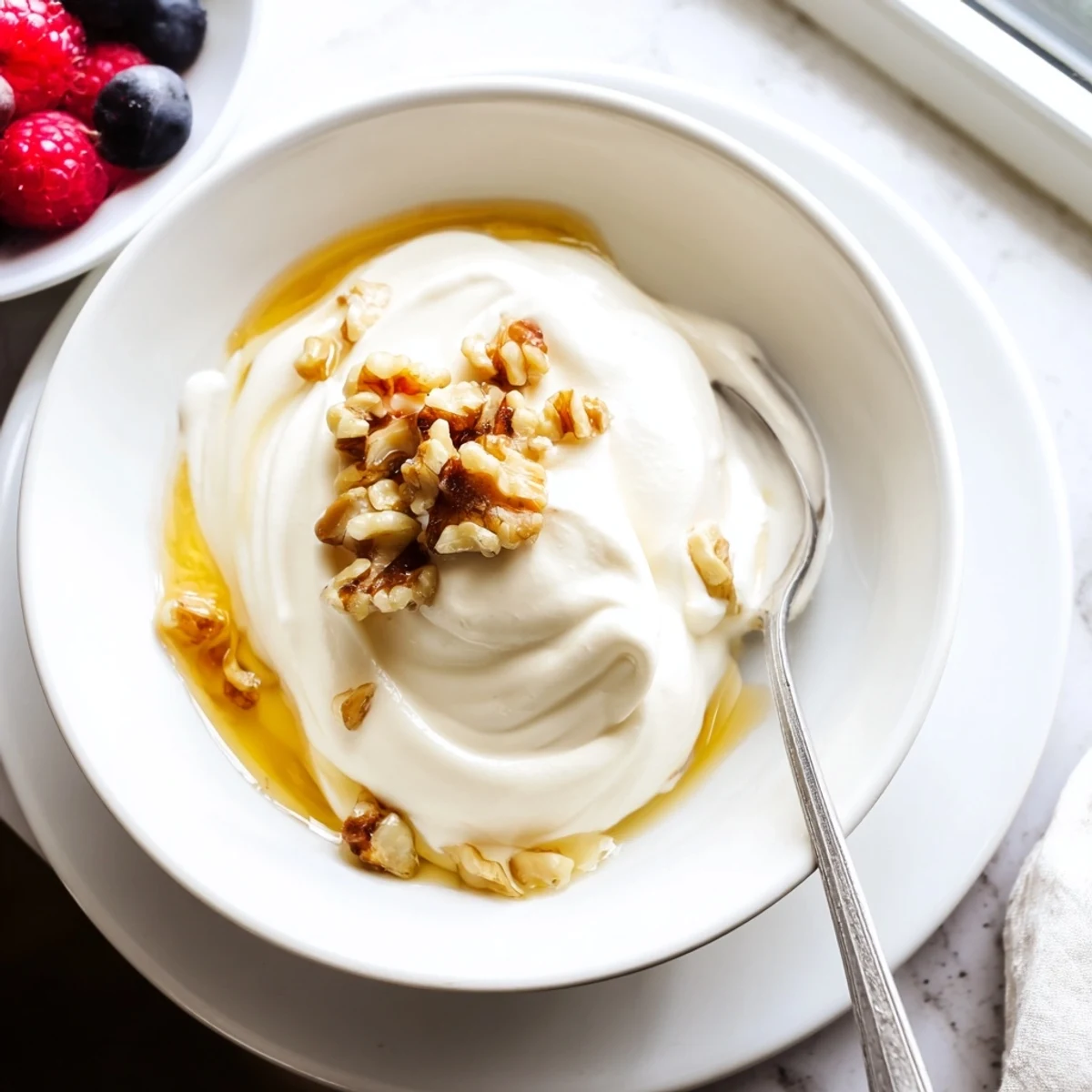
This Greek yogurt is so thick and creamy that it stands on its own, but a drizzle of honey and handful of toasted walnuts turns it into something elegant enough for brunch. I also use it as a substitute for sour cream in recipes, swirl it into soups for extra richness, or serve it alongside spiced dishes.
- Save the whey: that yellow liquid you strained off is packed with protein and works beautifully in smoothies or bread recipes
- Flavor after straining: mix in vanilla, honey, or fruit preserves once the yogurt has reached your desired thickness
- Make it savory: garlic, herbs, and a little salt transform this into the best dip you have ever tasted
 Save
Save There is something deeply satisfying about making your own yogurt, about participating in this ancient transformation that turns simple milk into something nourishing and delicious. Once you start, you might find yourself wondering why you ever bought those little cups from the store.
Recipe FAQs
- → What makes Greek yogurt different from regular yogurt?
-
Greek yogurt undergoes straining to remove whey, resulting in a thicker, creamier texture with higher protein concentration. Regular yogurt retains all liquid, making it thinner and less concentrated.
- → Can I use low-fat or skim milk?
-
While possible, whole milk produces the creamiest results. Low-fat versions yield thinner yogurt that may become grainy during straining. If using reduced fat milk, consider shortening straining time.
- → How long does homemade Greek yogurt stay fresh?
-
Properly refrigerated homemade Greek yogurt keeps for 1–2 weeks. Always use clean utensils when scooping to prevent contamination. The tangy flavor intensifies slightly over time.
- → What can I do with the whey liquid?
-
The strained whey contains protein and beneficial nutrients. Blend into smoothies, substitute for buttermilk in baking, add to soup stocks for richness, or use as a liquid in pancake batter.
- → Why didn't my yogurt set properly?
-
Inconsistent temperature during culturing is the most common culprit. The milk must stay consistently warm (around 110°F) for the full 6–8 hours. Also ensure your starter contains active live cultures and wasn't added to milk that was too hot.
- → Can I reuse homemade yogurt as starter for future batches?
-
Yes, save 2 tablespoons from your best batch to start the next one. However, starters lose potency after 3–4 generations, so occasionally refresh with fresh commercial yogurt containing live cultures.