
 Save
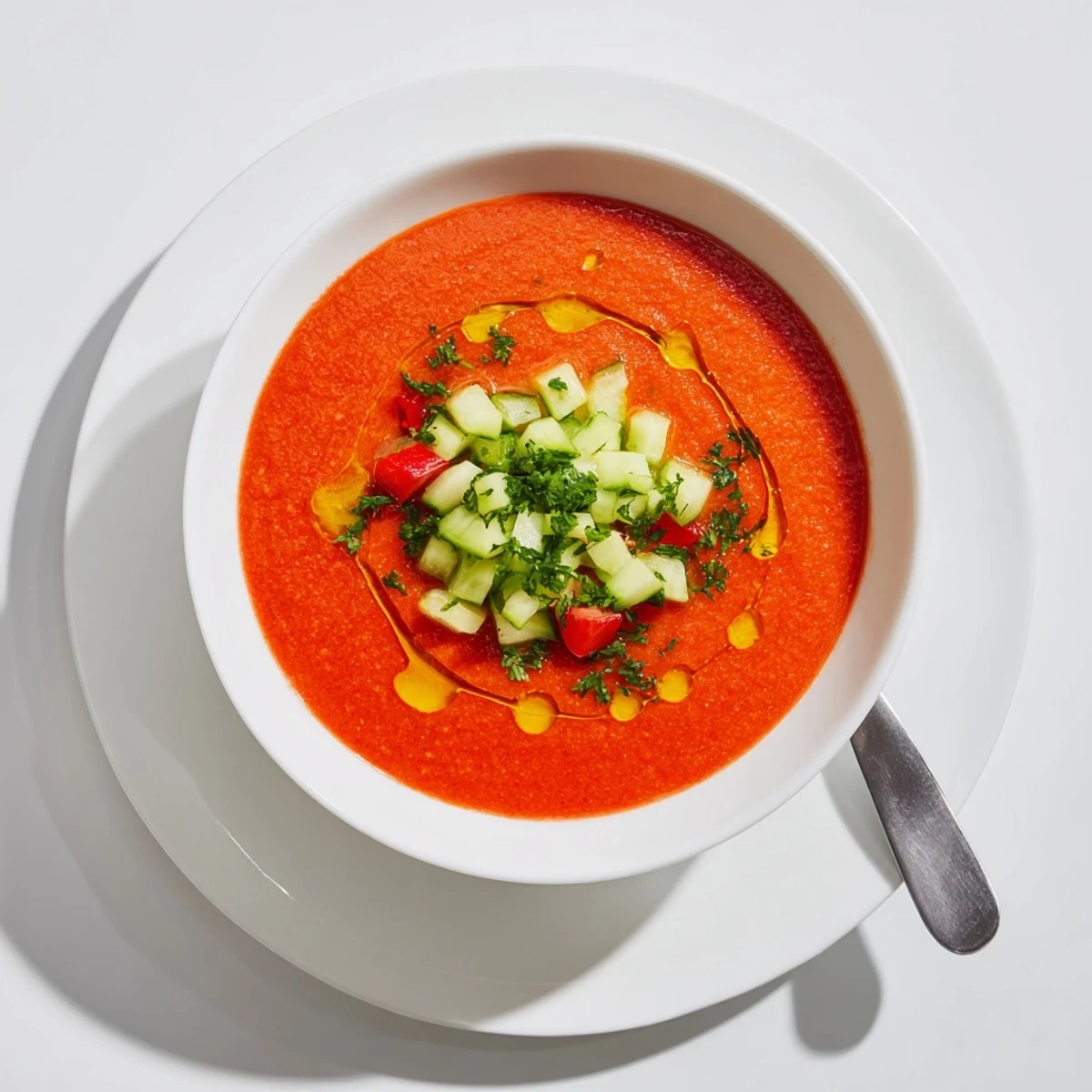
Save This classic Spanish cold soup combines ripe tomatoes, cucumber, red bell pepper, onion, and garlic into a vibrant, refreshing dish perfect for warm weather. The preparation comes together in just 20 minutes of active work, blending fresh vegetables with extra-virgin olive oil and sherry vinegar. After chilling for at least two hours, the gazpacho develops its signature bright, tangy flavor profile.
The beauty of gazpacho lies in its simplicity and versatility—serve it as a light starter, alongside crusty bread, or pair with crisp white wine for an elegant summer meal.
August in Seville taught me that gazpacho is not soup, it is survival, a cold blade cutting through heat so thick you could spread it on toast. My landlady Concha would leave a pitcher of it on the tiled counter every afternoon, never saying a word, just placing it there like a quiet act of mercy. That blazing orange red liquid, glossy with olive oil, tasted like the entire garden had been blended into something alive and singing.
I brought this habit home with me and now June through September my fridge is never without a jar of something red and cold. My neighbor Dave walked in once during a heatwave, saw me drinking it straight from a mason jar, and called me a health freak. Three days later he asked for the recipe.
Ingredients
- Ripe tomatoes (800g): This is everything, use tomatoes so ripe they barely hold their shape because that deep sweetness is the entire backbone of the soup.
- Cucumber (1 medium): Peel and seed it well since the skin adds bitterness and the seeds water down the texture.
- Red bell pepper (1 medium): Adds a surprising sweetness that rounds out the acidity of the tomatoes beautifully.
- Red onion (1 small): Keep it small, you want a gentle bite not a pungent kick that overwhelms everything else.
- Garlic (2 cloves): Fresh is non negotiable, and if it sprouts green centers, cut them out.
- Fresh parsley or cilantro (2 tbsp): Parsley is more traditional but cilantro gives it a modern twist that I genuinely love.
- Extra virgin olive oil (4 tbsp): Use the good stuff here since it is a raw ingredient and you will taste every note of it.
- Sherry vinegar (2 tbsp): Sherry vinegar is authentically Spanish and worth seeking out, though red wine vinegar works in a pinch.
- Cold water (250ml): Adjust this to your preferred thickness, less for a rustic version and more for something drinkable.
- Sea salt and black pepper: Season boldly because cold food always needs more salt than you think.
Instructions
- Rough chop everything:
- Toss the tomatoes, cucumber, bell pepper, onion, garlic, and herbs into the blender without overthinking it since everything gets pureed anyway.
- Blend until mostly smooth:
- Run the blender on high for about a minute until you see a vibrant thick liquid with just a few flecks of color remaining.
- Add the liquids and seasonings:
- Pour in the olive oil, vinegar, cold water, salt, and pepper, then blend again until the mixture looks unified and glossy.
- Taste and adjust:
- Dip a spoon in and trust your palate since you might want more vinegar for brightness or a splash of water to loosen it up.
- Strain if you want refinement:
- Press the soup through a fine mesh sieve for a silky restaurant quality texture, or skip this entirely for a rustic version.
- Chill thoroughly:
- Cover and refrigerate for at least two hours because the flavors transform and marry in the cold into something far greater than the raw parts.
- Serve with personality:
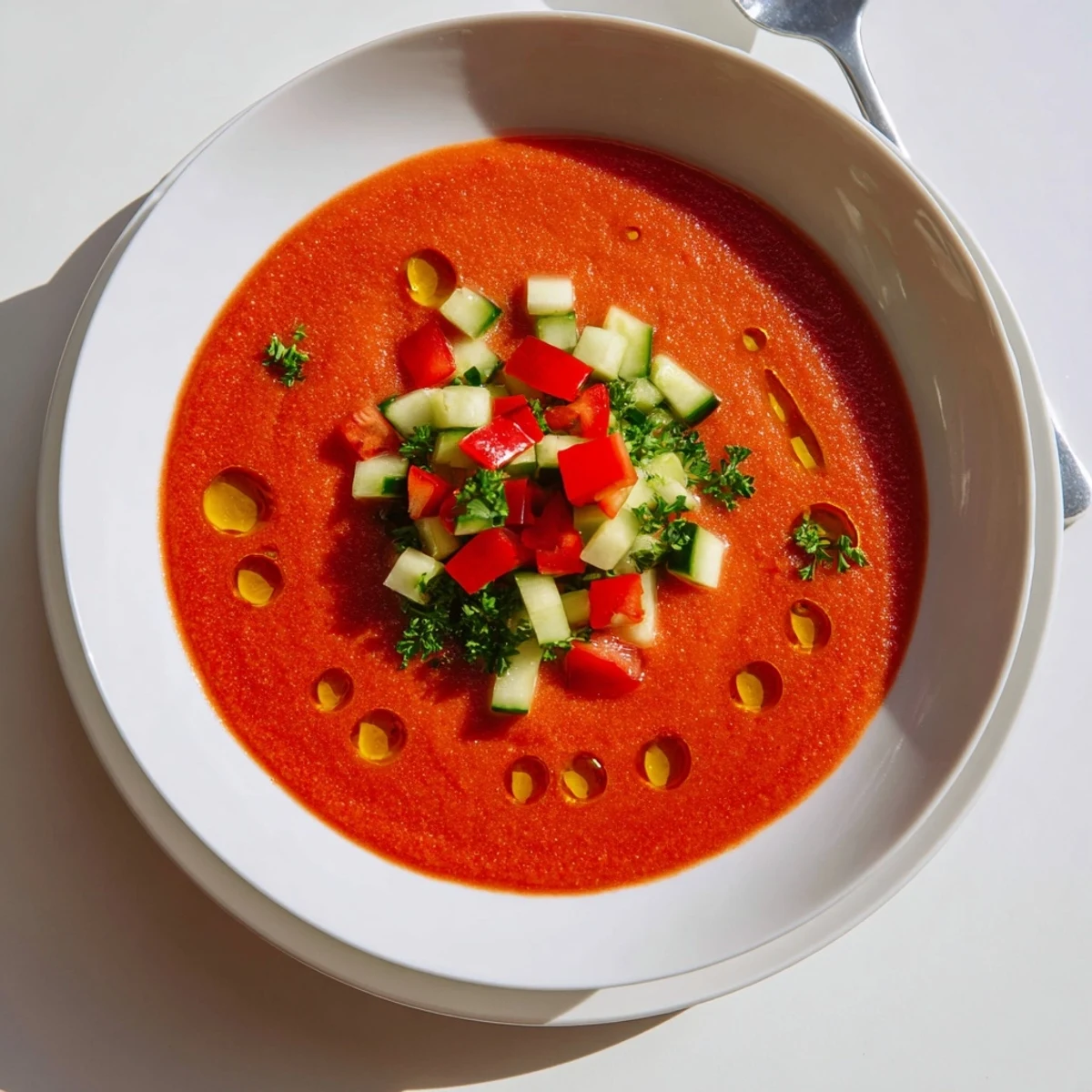
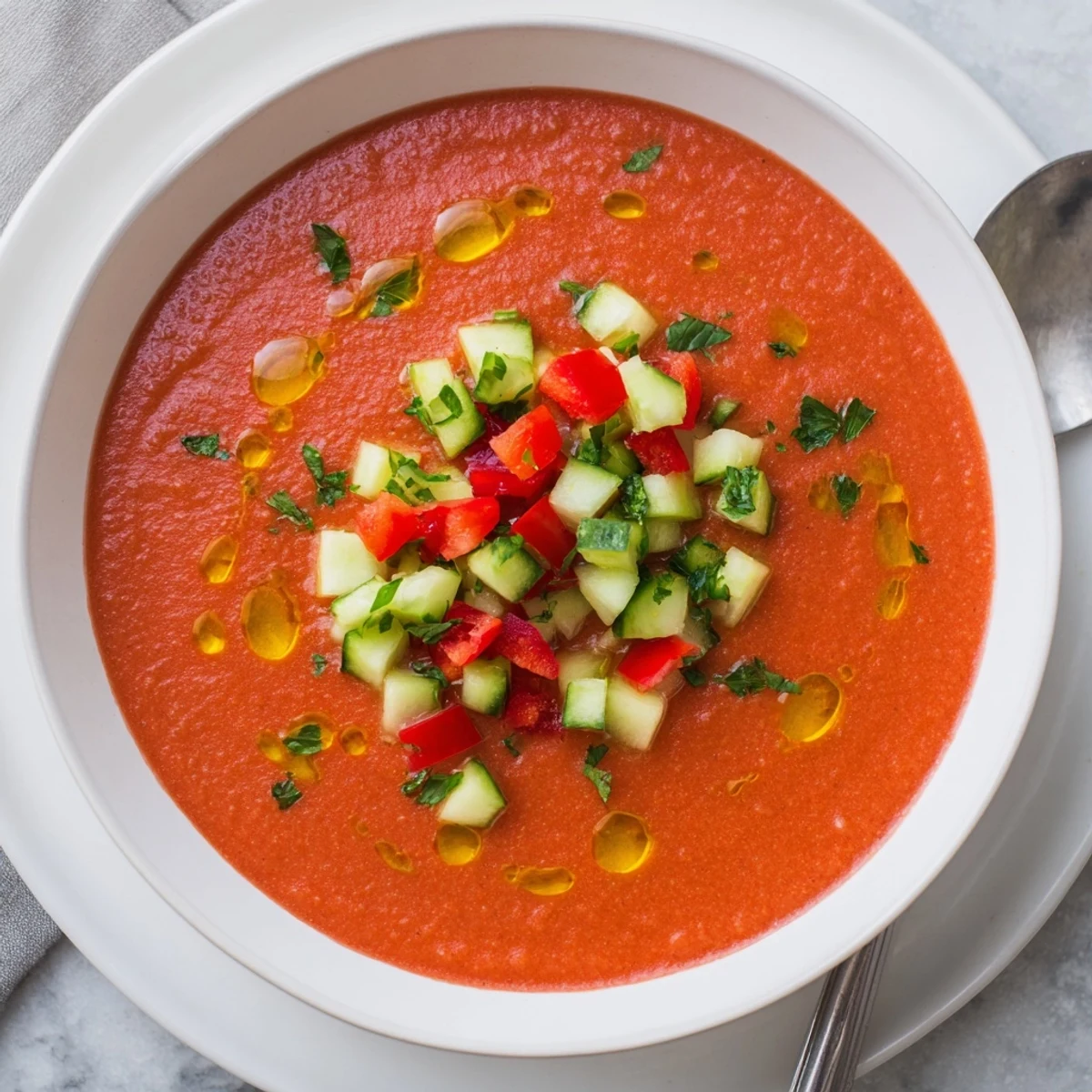
- Stir well, pour into shallow bowls, and scatter your chosen garnishes on top with a generous final drizzle of olive oil.
 Save
Save I once served this at a dinner party in July and watched a table full of成年人 who had been complaining about the heat go completely silent after the first sip. That is the power of a good gazpacho. It demands nothing from you but patience while it chills.
Serving and Pairing Ideas
Crusty bread is the obvious companion but I have also served it alongside grilled shrimp skewers and the combination is magical. A chilled glass of Albario or any crisp acidic white wine turns a bowl of gazpacho into a full summer meal worth lingering over.
Texture and Consistency Notes
Some Spaniards prefer their gazpacho thick enough to stand a spoon in, others drink it from a glass. I land somewhere in the middle, pourable but with body. Adding a small slice of stale bread during blending gives you that traditional creamier texture, though you should omit it for gluten free diets.
Storing and Making Ahead
Gazpacho actually improves overnight in the fridge, which makes it the perfect make ahead dish for entertaining or for simply having something nourishing ready when the heat saps your will to cook. It keeps well for up to three days covered tightly, though the color may darken slightly as the vegetables oxidize.
- Stir vigorously before serving since the water and oil tend to separate while resting.
- Freeze leftover gazpacho in ice cube trays for a brilliant base to use in sauces and marinades later.
- Always taste again before serving since chilling mutes flavors and you may need a final pinch of salt.
 Save
Save Keep a jar of this in your fridge all summer long and you will understand why Spaniards have been drinking it for centuries. It is the simplest kind of perfection, just vegetables, oil, vinegar, and time.
Recipe FAQs
- → How long should gazpacho chill before serving?
-
Refrigerate the gazpacho for at least 2 hours to develop flavors and achieve the proper chilled temperature. It can be made up to 2 days in advance and actually tastes better after the ingredients have time to meld together in the refrigerator.
- → Can I make gazpacho without a blender?
-
While a blender creates the smoothest texture, you can finely chop all vegetables by hand and mash them slightly to release juices. The result will have more texture but still deliver the same refreshing flavors.
- → What type of tomatoes work best?
-
Use the ripest, juiciest tomatoes available—vine-ripened, heirloom, or Roma varieties all work well. The quality of your tomatoes directly impacts the final flavor, so avoid underripe or mealy tomatoes.
- → Is straining the gazpacho necessary?
-
Straining is optional and depends on your preference. For a silky-smooth restaurant-style texture, strain through a fine-mesh sieve. If you enjoy more body and fiber in your cold soup, skip this step entirely.
- → How do I store leftovers?
-
Keep gazpacho in an airtight container in the refrigerator for up to 3 days. The flavors will continue to develop over time. Stir well before serving again as ingredients may separate slightly.